LAMECH’S SHADOW INSIGHTS
Among the Stars, Under God’s Authority
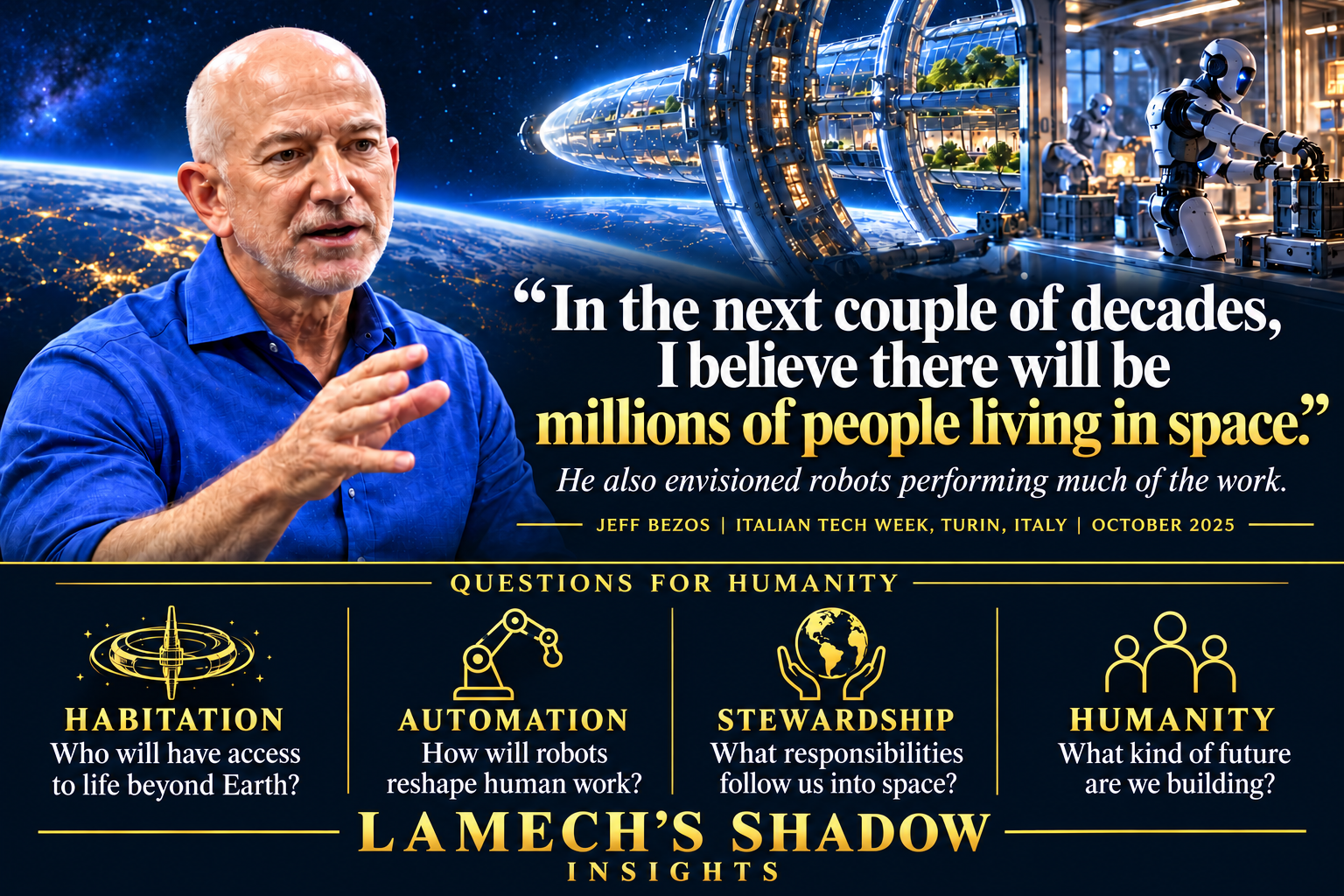
Jeff Bezos’s vision of millions of people living in space, with robots performing much of the work, invites us to imagine how different humanity’s future could become. Such a possibility raises questions about engineering, resources, and the organization of life beyond Earth. For Christians, it also raises a question about our relationship with God: how should we exercise growing technological power while recognizing that we remain under His authority?
Scripture presents human creativity as part of a meaningful vocation. In Genesis 2:15, God places the human being in the garden to cultivate it and care for it. This calling gives us a foundation for valuing discovery, work, and the responsible use of knowledge. It also places human activity within a relationship of accountability. We work within a creation we have received, and our purposes must be examined in light of the God to whom it belongs.
The tension between achievement and accountability is central to the perspective of Lamech’s Shadow. Genesis 4 describes the development of livestock keeping, music, and metalworking before presenting Lamech’s boast of violence and vengeance. The passage does not condemn those cultural achievements or suggest that technology caused his violence. It does, however, place human ingenuity alongside a troubling expression of power. That proximity invites us to consider how a society can develop its capabilities while failing to exercise them with wisdom and restraint.
This question remains relevant as artificial intelligence expands what people and institutions can accomplish. Machines may perform more of our work, and new technologies may eventually support communities beyond Earth. These possibilities deserve careful exploration, but their technical feasibility cannot settle the questions of whether, why, or how they should be pursued. Those judgments also require attention to human dignity, justice, stewardship, and our responsibilities before God.
Psalm 24:1 declares, “The earth is the LORD’s, and everything in it.” Within the wider biblical understanding of God as Creator, humanity’s movement beyond Earth would not place us outside His authority. Whatever environments we enter and whatever systems we build, we would remain creatures whose knowledge is limited and whose decisions affect others.
Recognizing God’s authority should therefore shape how we understand our own. People entrusted with technological, economic, or political power make decisions that can open opportunities for some while placing burdens on others. Christian accountability asks them to consider whose interests are being served, how vulnerable people are treated, and whether they are willing to accept correction or limits. As the reach of their decisions grows, these responsibilities become more consequential.
A future in which people live in space would bring such questions into unfamiliar settings. Decisions about access, labor, resources, and governance would help determine whether those communities protect human dignity and serve a common good. If robots performed much of the work, we would still need to consider how people find purpose, how benefits are shared, and who holds authority over the systems on which daily life depends.
These questions provide a way to examine the vision without claiming to know the personal motives of the person proposing it. They also turn our attention toward the institutions, values, and choices that would give such a future its character.
For Christians, humility before God can guide this examination. It encourages gratitude for discovery while reminding us that greater capability does not make our judgment infallible. It calls us to test our ambitions, listen to those affected by our decisions, and remain willing to change direction when our plans conflict with our responsibilities.
As we imagine humanity’s future among the stars, Lamech’s Shadow invites us to consider how our exercise of power will develop alongside our achievements. The question is how we can pursue that future with wisdom, care for one another, and an enduring recognition that we remain accountable to God.
For reflection: How might humility before God shape the way humanity develops AI and prepares for life beyond Earth?


Leave a Reply